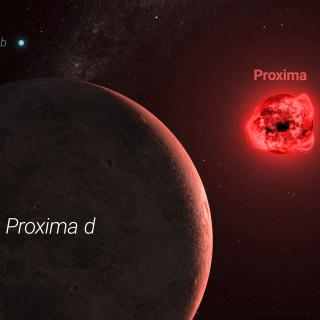
The new infrared spectrograph NIRPS, built with the participation of the Instituto de Astrofísica de Canarias (IAC) and installed on the 3.6-metre telescope at ESO’s La Silla Observatory in Chile, has achieved its first scientific results, with four articles published today in the journal Astronomy & Astrophysics and one more accepted for publication. The data confirm its ability to detect Earth-like planets in the infrared for the first time with a precision better than one metre per second. One of the papers, led by IAC researcher Alejandro Suárez Mascareño, confirms the presence of a
An international team of scientists, including researchers from the Canary Islands Institute of Astrophysics (IAC), has confirmed the existence of three bodies orbiting the dynamic exoplanetary system TOI-201. They include a super-earth (TOI-201 d), a warm Jupiter (TOI-201 b) and a brown dwarf (TOI-201 c). The paper is published in Science Advances. “The goal was to characterize the TOI-201 planetary system to understand not just what planets are there, but how they interact with each other dynamically,” said Ismael Mireles, a PhD candidate in the UNM Department of Physics and Astronomy and
An international scientific team, including members of the Instituto de Astrofísica de Canarias (IAC), has launched an ambitious program to map exoplanets located around the Neptunian Desert —a region around stars where planets the size of Neptune are very rare— in order to better understand the mechanisms of planetary system evolution and formation. This scientific expedition has delivered its first results with the observation of the TOI-421 planetary system. Analysis of this system reveals a surprisingly inclined orbital architecture, offering new insights into the chaotic history of