February 9, 2010
Español | English

Instituto de Astrofísica de Canarias

About the IAC

Introduction

The Instituto de Astrofísica de Canarias(IAC) is an international research centre in Spain which comprises:

These centres, with all the facilities they bring together, make up the European Northern Observatory  (ENO).

The IAC is constituted administratively as a Public Consortium, created by statute in 1982, with involvement from the Spanish Government, the Government of the  Canary Islands, the University of La Laguna and Spain's Science Research Council (CSIC).

The International Scientific Committee (CCI) manages participation in the observatories by institutions from other countries. A Time Allocation Committee (CAT) allocates the observing time reserved for Spain at the telescopes in the IAC's observatories.

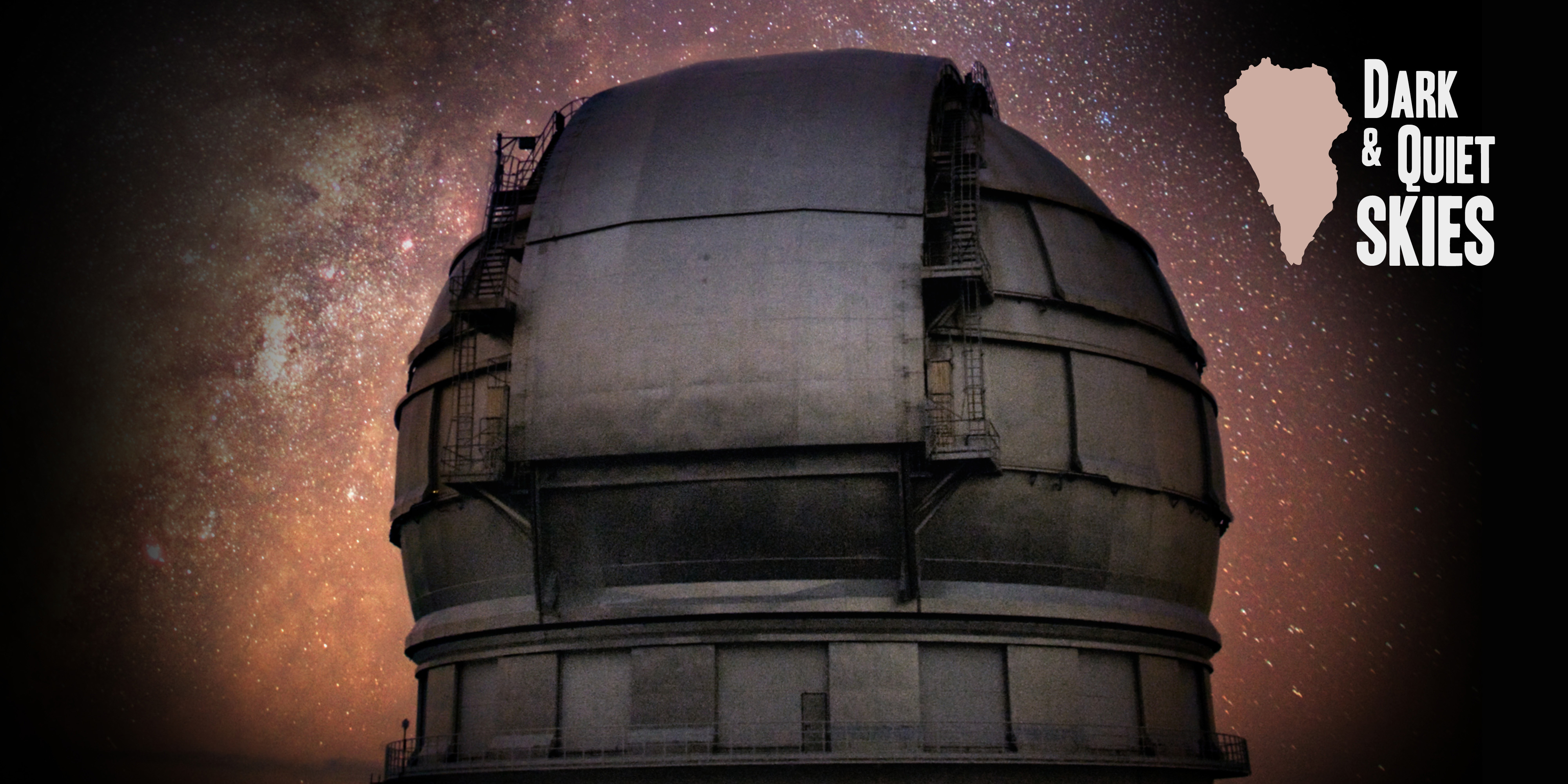
The exceptional quality of the sky over the Canaries for astronomical observations is protected by law. The IAC's Sky Quality Protection Office (OTPC) regulates the application of the law and its Sky Quality Group continuously monitors the parameters that define observing quality at the IAC Observatories.

The IAC's research programme includes astrophysical research and technological development projects

The IAC is also involved in researcher training, university teaching  and outreach activities.

The IAC has devoted much energy to developming technology for the design and construction of a large 10.4 metre diameter telescope, the (Gran Telescopio CANARIAS, GTC), which is sited at the Observatorio del Roque de los Muchachos and will see first light in summer 2007.

The IAC's Office for the Publication of Research Results (OTRI), created under the provisions of the National Research and Development Plan (Plan Nacional de I+D), was a pioneer of the National Network of OTRI offices.

However, the History of the IAC begins much earlier...

History of the IAC

The observatories of the Instituto de Astrofísica de Canarias - the Observatorio del Teide, in Tenerife, and the Observatorio del Roque de los Muchachos, in La Palma - are located at two of the most favourable sites for astronomical observation. The contemporary history of astronomy in the Canaries began with astronomy expeditions in the 19th century.  A collection of writings about these campaigns, by Prof. F. Sánchez, can be found in Vistas in Astronomy (1985).

IAC Public Consortium

Created in 1982 as a result of the el Consorcio Público IAC law, with its own legal personality and integrated with the:

  • Administration of the Spanish State
  • Comunidad Autónoma de Canarias
  • Universidad de La Laguna
  • Consejo Superior de Investigaciones Científicas (CSIC)

Governance:

  • Board: (the decision-making body for administrative and economic matters), made up of the:
    • Minister of Science and Innovation.
    • President of the Government of the Canaries.
    • Undersecretary of the Ministry of the President of the Government.
    • Rector of the University of La Laguna.
    • President of the CSIC.
    • Director of the IAC.
  • Directorate (the decision-making body for science and technology), the executive organ of the Board, which oversees the whole of the IAC. It has a number of advisory bodies including:
  • Management Committee (made up of the Director and the Coordinators of each of the Areas).

The Research Advisory Committee (the most senior consultative body for science and technology policy at the IAC), made up of suitably qualified astronomers from all over the world.

Divisions:

  • Research
  • Instrumentation
  • Education
  • General Administration

Aims :

  • To conduct and promote all types of astrophysics and astrophysics-related research..
  • To promote astronomical knowledge, collaborate on specialist university education, and train science and technology personnel in all Astrophysics-related fields.
  • To administer the existing and any future centres, observatories and astronomic installations.
  • To foster relations with the national and international scientific communities.