
The Institute took part in the meeting held in Copenhagen with numerous contributions linked to astronomical instrumentation, precision engineering, space technologies and the development of new infrastructures for observing the Universe.
The Instituto de Astrofísica de Canarias (IAC) took part in SPIE Astronomical Telescopes + Instrumentation 2026, one of the leading international meetings dedicated to the development of telescopes, astronomical instrumentation and related technologies. The conference, held from 5 to 10 July in Copenhagen, Denmark, brought together more than 3,000 participants from research centres, observatories, universities, space agencies and technology companies from around the world.
The IAC’s presence at this edition reflected the breadth of the Institute’s scientific and technological activity, with contributions related to instrumentation for large telescopes, advanced optics, opto-mechanics, astrophotonics, cryogenic systems, high-precision space photometry, Earth observation from small satellites and the development of technologies for future astronomical and space infrastructures.
During the meeting, IAC research, technical and engineering staff took part in different scientific and technological sessions, both through oral communications and posters. The Institute’s contributions addressed advances in strategic projects such as the New Robotic Telescope (NRT), HARMONI for the Extremely Large Telescope (ELT), IACSAT-DUNE, DRAGO, DALI, ANDES, LiteBIRD, CaNaPy, CTAO and new technologies associated with the Small Exo-Life Finder (SELF), among other developments.
This participation highlighted the IAC’s role as a leading centre in the design, construction, integration and validation of advanced technology for astronomy and space. In particular, the Institute showed results linked to high-precision optical and mechanical systems, cryogenic instrumentation, infrared cameras for small satellites, wavefront sensors, photonic technologies and solutions to improve the stability and performance of future observing systems.
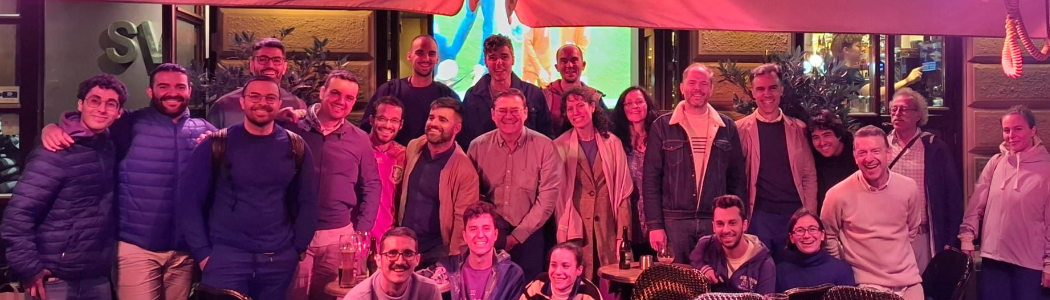
In addition to the contributions presented by Institute staff, the IAC was represented in work led by other international centres in which IAC researchers and technologists participated as authors or collaborators. This cross-cutting presence reflects the IAC’s integration into major international consortia and its capacity to contribute scientific knowledge, technical expertise and instrumental developments to frontier projects.
One of the highlights of the IAC’s participation in this edition was the recognition received by Elvio Hernández Suárez, Head of the Institute’s Mechanical Department, who received one of the awards for best poster presentation at the Advances in Optical and Mechanical Technologies for Telescopes and Instrumentation conference. The award recognised the technical excellence, innovation and quality of his contribution within one of the meeting’s busiest technology conferences.
The award-winning poster, entitled “Engineering challenges in the integration of the DALI cryogenic dark-matter prototype”, described the engineering challenges associated with the development and integration of the DALI (Dark-photons & Axion-Like particles Interferometer) prototype, an astroparticle instrument designed to explore axions and dark photons in the range of 6 to 60 GHz. The contribution addressed, among other aspects, the mechanical integration of an array of 72 magnets into a ferromagnetic yoke and the thermal architecture required to cool a 350-kilogram magnetic structure to cryogenic temperatures.
The work by Elvio Hernández Suárez and his team also set out the solution adopted in response to magnetic instabilities detected during assembly, which required the development of specific tooling, safety procedures and additional retention systems. Cryogenic and vacuum tests carried out with the integrated system demonstrated stable operation under combined magnetic-field, vacuum and low-temperature conditions, reaching approximately 37 K in the magnetic structure and 10 K in thermally isolated detector components.
This recognition underlines the quality of the technical work carried out at the IAC and the importance of engineering teams in advancing frontier scientific instrumentation. The Institute’s accumulated experience in the design and development of optomechanical, cryogenic and high-precision systems is a key element in its participation in highly complex international projects.
As part of the conference, a large group of IAC professionals also took part in scientific and technological exchange activities, including visits to major European reference facilities such as the European Spallation Source (ESS) and the MAX IV Laboratory, in Sweden. These activities helped to strengthen the Institute’s links with leading international infrastructures and to foster new opportunities for collaboration in strategic areas of technological development.
Through its participation in SPIE Astronomical Telescopes + Instrumentation 2026, the IAC consolidates its presence in one of the most relevant international forums for astronomical and space instrumentation. The diversity of contributions and the involvement of the Institute’s scientific, technical and engineering teams demonstrate the IAC’s capacity to combine frontier research, technological development, advanced engineering and international collaboration in support of the next generations of telescopes, instruments and scientific missions.