July 2026

Palencia
Eclipse Hotspots in Palencia
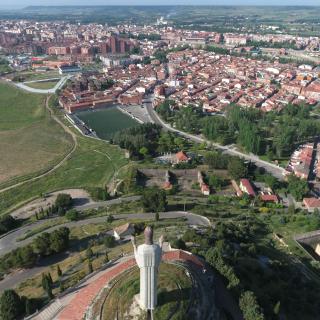
On August 10, 11, and 12, the IAC—coinciding with the teams’ presence in Palencia for training ahead of their work on the NATE project during the eclipse—will host an extensive program of educational activities spread across several of the city’s most popular venues and other towns in the province. These are the locations where science, outreach, and—why not?—fun and celebration will come together: Cerro del Otero The true heart of the entire program. A prime spot from which to take in the entire spectacle, where, starting on the afternoon of the 12th, the public is invited to enjoy and
Miguel Ángel Delgado
Advertised on
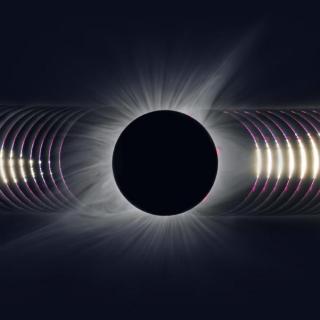
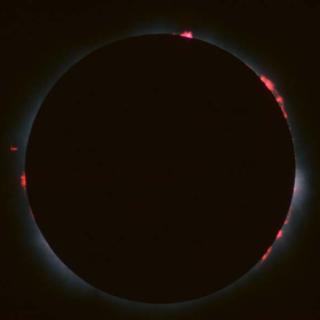
Secuencia fotográfica de un eclipse solar total (Crédito: J.C. Casado/StarryEarth)
Del primer contacto a las perlas de Baily para llegar a la corona, las cuatro fases del Eclipse Total de Sol
El próximo 12 de agosto de 2026 viviremos un acontecimiento extraordinario: un eclipse total de Sol. Durante la breve totalidad del eclipse solar, el cielo se oscurece y podremos ver unos pocos astros que normalmente solo son visibles de noche. Pero esta experiencia no es tan excepcional únicamente por la oscuridad, ya que eso ocurre cada noche; lo realmente único de un eclipse solar total es la posibilidad de poder observar a simple vista la capa más externa y oculta del astro rey, una de las estructuras más enigmáticas y espectaculares del universo: su corona. La corona solar es la capa
Advertised on
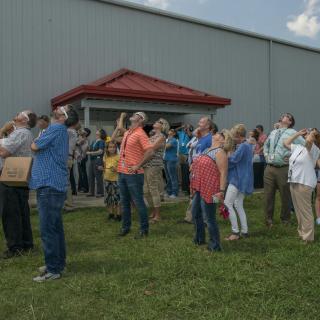
People watching a solar eclipse in the United States in 2017
How To Tell If What You Saw Was a Total Solar Eclipse
These days, it’s not uncommon to hear people talk about what they usually use to view eclipses, and they even refer to them as if several people had witnessed them. This is surprising, considering that the last total solar eclipse visible on the Spanish mainland took place in 1905. It’s true that there was another one later in 1912, but it affected such a small area and lasted for such a short time (just a few seconds) that very few people actually saw it. And nothing else since then, except for the one that could be seen in 1959 in the Canary Islands. But then, what did the people who claim
Miguel Ángel Delgado
Advertised on
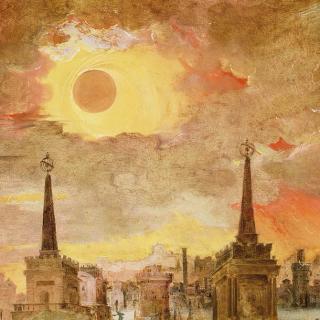
Detail from the painting "Dionysius the Areopagite Converting the Pagan Philosophers" by Antoine Caron (Google Arts & Culture/J. Paul Getty Museum)
What eclipses Don't Do
We’re counting down to one of the greatest spectacles the sky has to offer: a total solar eclipse on August 12. The IAC will take this opportunity to launch the first phase of the NATE project, along with a full program of educational activities, in Palencia. And this is helping us see how this phenomenon continues to generate excitement that’s almost—or perhaps even quite—on par with a World Cup final. It is a remnant of what has always stirred within human beings when faced with an unusual—and for a long time unexpected—occultation of the Sun by the Moon in broad daylight. Although today
Miguel A. Delgado
Advertised on
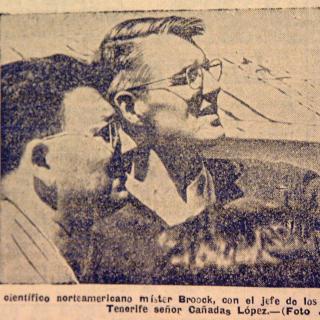
Imagen de prensa del científico Broock en las Cañadas
El año 1959: el del eclipse del ‘fin del mundo’ y del germen del Instituto de Astrofísica de Canarias
“La fin del mundo, la fin del mundo”. Esta es la frase que los abuelos y bisabuelos canarios recuerdan de ese 2 de octubre de 1959, el día en el que el Archipiélago de Canarias, décadas antes de que se convirtiera en una comunidad autónoma, vivió un acontecimiento histórico y muy parecido al que vivirá gran parte de la Península Ibérica este próximo 12 de agosto: un eclipse total de Sol. Las circunstancias, la historia y la cultura popular han cambiado muchísimo. Ese ‘fin del mundo’ de nuestros abuelos era desconocimiento por falta de educación e información. Hoy, aunque España tiene los
Advertised on
NATE Logo
NATE Outreach Program in Palencia – Eclipse August 2026
SATURDAY, AUGUST 8 FRÓMISTA 8:00 p.m. Santa María del Castillo Church (6 La Plata St.) Talk: Eclipses. When Magic Became Science Eva Villaver Sobrino Deputy Director of the Canary Islands Institute of Astrophysics MONDAY, AUGUST 10 PALENCIA 7:00 p.m. Principal Theater (3 Burgos St.) Opening adress: What (really) happens during a total solar eclipse? Valentín Martínez Pillet Director of the Canary Islands Institute of Astrophysics CARRIÓN DE LOS CONDES 6:00 p.m. Sarabia Theater (6 Marqués de Santillana Square) Talk: Overshadowed. Scientific and Humanistic Reflections on the Sun and Its
Advertised on