
The Canary Islands Institute of Astrophysics (IAC) is organising the 37th Canary Islands Winter School of Astrophysics, which will take place in San Cristóbal de La Laguna (Tenerife) from 16 to 27 November 2026. This edition will focus on the study of massive stars as tools for understanding processes ranging from star formation to gravitational wave events and core-collapse supernovae.
The training programme is aimed at around 75 students on advanced master’s and doctoral programmes, as well as postdoctoral researchers in the early stages of their careers. Over the course of two weeks, participants will have the opportunity to learn directly from internationally renowned researchers about issues relating to the observation and modelling of these important astrophysical objects at different stages of their evolution. Topics to be covered include massive blue and Wolf-Rayet stars, red supergiants, supernova-type explosions, black holes and gravitational wave sources. In addition, a series of practical workshops will be held on the use of atmospheric models and the evolution of massive stars, spectroscopic analysis of isolated massive stars and those in binary systems, and simulations of stellar populations including massive stars.
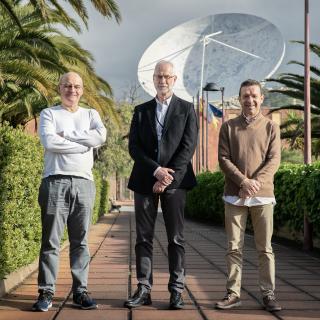
Sergio Simón Díaz, a research scientist at the IAC and coordinator of this year’s event alongside Gastón Escobar, Sara R. Berlanas and Michael Abdul-Masih, notes that the main aim of this year’s Winter School is to provide a solid technical foundation for the next generation of astrophysicists: “The aim is for participants to gain a comprehensive understanding of the importance of the role played by massive stars in many branches of modern astrophysics and to know how to tackle the challenges that this field of research will present in the coming decades.”
“To this end, we have put together a programme that seeks to integrate, in a coordinated manner, the learning of a wide range of techniques developed over the last few decades that enable their study, both theoretically and observationally,” says Gastón Escobar, a postdoctoral researcher at the IAC.
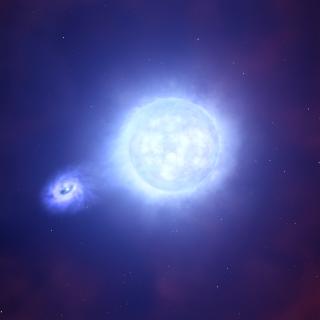
"Given that most massive stars are born in multiple-star systems, the programme places particular emphasis on how binary interactions shape their final evolution and their role as progenitors of gravitational wave events," explains M. Abdul-Masih, who has recently joined the Department of Astrophysics at the University of La Laguna (ULL) as a Ramón y Cajal researcher.
The training will be complemented by guided tours of the facilities at the Teide Observatory in Tenerife and the Roque de los Muchachos Observatory in La Palma. These visits will highlight how these facilities are essential for obtaining high-quality data to help us understand the importance of massive stars in the evolution of the universe, the galaxies that make it up, and the formation of the atoms and molecules that have enabled life to emerge on Earth.
“These visits to the observatories in the Canary Islands, which are already a tradition at the IAC’s Winter Schools, will be complemented this year by a wide variety of outreach and dissemination activities aimed at fostering scientific and social interaction among the School’s participants, as well as bringing stellar astrophysics closer to Canarian society,” notes Sara R. Berlanas, a postdoctoral researcher at the ULL.
Those wishing to attend must submit their application by 15 June 2026 via the centre’s official website. Following the assessment of applications, the organising committee will announce the final list of selected attendees between late June and early July, after which formal registration and payment of the relevant fees will take place.