A team of scientists, including astrophysicist Carlos Hernández Monteagudo from the University of La Laguna (ULL) and the Canary Islands Institute of Astrophysics (IAC), has compiled one of the most comprehensive catalogues of small bodies in the Solar System, based on photometric observations made from Earth. The study, published in Monthly Notices of the Royal Astronomical Society, compiles data on 6,579 asteroids, comets and irregular satellites, mainly from the main belt located between Mars and Jupiter, opening up new possibilities for studying their composition and rotation.
The research is based on initial data from the Javalambre VARiability Survey (J-VAR), which analyses objects that change in the sky using the Javalambre Auxiliary Survey Telescope at the Javalambre Astrophysical Observatory (Teruel, Spain). After analysing more than 30,000 images, the team detected 131,966 moving objects, corresponding to 6,579 individual small bodies, and collected their sunlight reflection data using seven different filters.
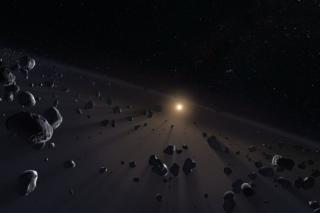
They are primitive remnants of the planet-forming process, so this study provides some insights into the origin and evolution of the Solar System. “They have undergone little geological or thermal evolution, but they have undergone intense evolution due to collisions that have affected their shape, size and surface,” says Hernández Monteagudo.
This study uses multiband photometry, observing objects at different wavelengths. By analysing differences in brightness between filters—known as astronomical colours—scientists can infer properties of the asteroids’ surfaces. The data allows for the differentiation of asteroid types, such as those rich in carbon or dominated by silicates, and the reconstruction of light spectra for some objects, identifying general trends in their composition. The vast amount of information makes this catalogue a valuable tool for statistical analysis.
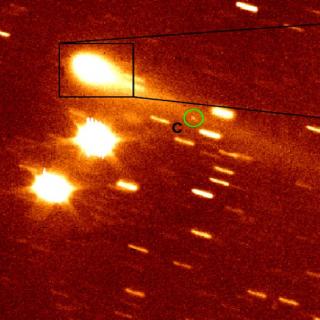
The survey’s design also makes it possible to study variations in brightness over time, linked to the rotation of asteroids and caused by their irregular shapes and differences in reflectivity. During the analysis, an unclassified object was detected which, following notification to the Minor Planet Centre, was confirmed as an irregular satellite of Jupiter.
The team plans to expand the catalogue with new observations and improve the classification of asteroids. Researchers from the IAC and the ULL are involved, alongside other institutions such as the Centre for Cosmic Physics Studies of Aragon, the Institut d’Astrophysique Spatiale, the Institute of Astrophysics of Andalusia, the Université Côte d’Azur, the Federal University of Rio de Janeiro, the National Observatory, the University of Michigan, the University of São Paulo, the Donostia International Physics Centre, the Basque Foundation for Science and the CSIC-INTA.
Article: D Morate et al. "JaMONCITO: the Javalambre – Moving Objects New Catalog from Investigations of Time-domain Observations", Monthly Notices of the Royal Astronomical Society, Volume 545, Issue 4, February 2026, staf2052, https://doi.org/10.1093/mnras/staf2052
Contact at the IAC:
Carlos Hernández Monteagudo, carlos.hernandez.monteagudo [at] iac.es (carlos[dot]hernandez[dot]monteagudo[at]iac[dot]es)