

It may interest you
-
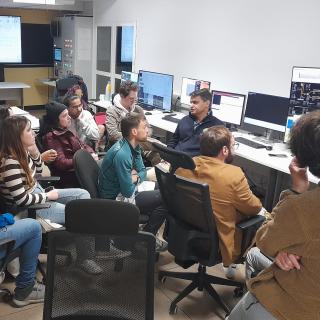 The EU-funded EDUCADO project (Exploring the Deep Universe by Computational Analysis of Data from Observations) at the Instituto de Astrofísica de Canarias (IAC) is organising a two-night astronomical observation school providing hands-on research training for early-stage researchers in astronomy and computer science. The program will convene 15 doctoral candidates from across Europe for an immersive, interdisciplinary learning experience. Attendees will engage in night time astronomical observations utilizing state-of-the-art telescopic instrumentation, guided data analysis workshops, andAdvertised on
 -
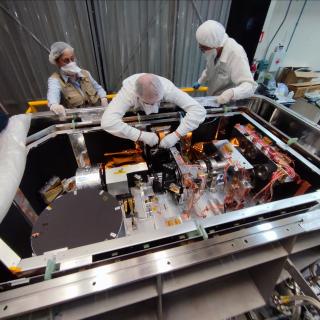 The Instituto de Astrofísica de Canarias (IAC) has successfully completed the integration of the scientific detector into the FRIDA (inFRared Imager and Dissector for Adaptive Optics) instrument, an integra-field camera and spectrograph designed to work with the adaptive optics system of the Gran Telescopio Canarias (GTC or Grantecan), the world's largest optical and infrared telescope, located at the Roque de los Muchachos Observatory in La Palma. The integration was carried out in the laboratories of the National Autonomous University of Mexico (UNAM) in Mexico City by a team from the IACAdvertised on
 -
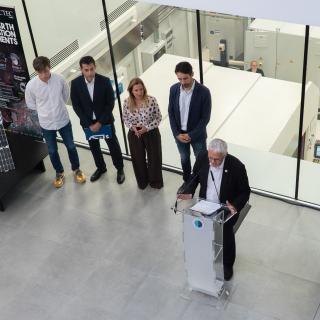 La presidenta del Cabildo de Tenerife, Rosa Dávila, ha anunciado esta mañana la aprobación de una subvención de 2,2 millones de euros al Instituto de Astrofísica de Canarias (IAC) para la fabricación de DRAGO-3, una cámara de última generación que se integrará en una constelación global de satélites en órbita baja. Esta red de satélites interconectados está concebida para ofrecer servicios globales o regionales para Tenerife. El importe exacto de la subvención asciende a 2.208.120 euros. El anuncio se ha realizado durante una visita a las instalaciones de IACTEC, la división tecnológica delAdvertised on