
The event also hosted the first annual meeting of the CIARMA network, which was established as a result of the project’s activities with European project managers from the Canary Islands.
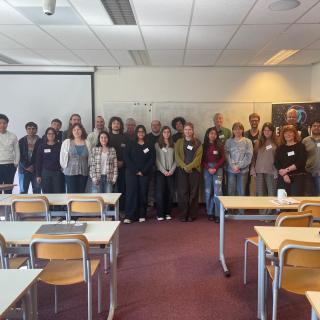
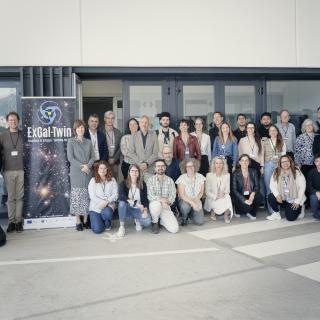
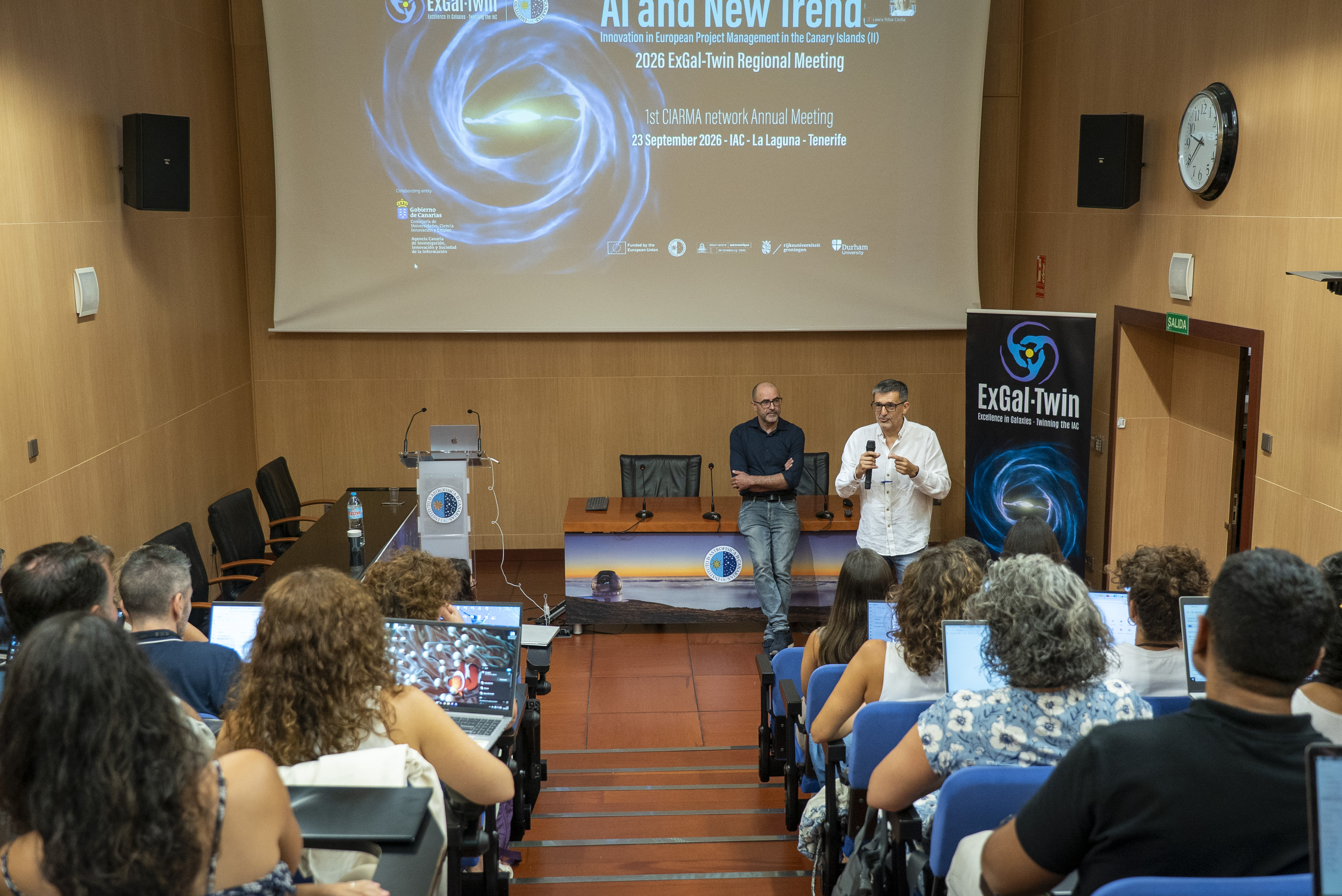
The headquarters of the Instituto de Astrofisica de Canarias (IAC) in La Laguna hosted yesterday the 2nd Regional Meeting of ExGal-Twin, a Horizon Europe project coordinated by the IAC. The meeting was entitled “Innovation in project management in the Canary Islands (II): Artificial Intelligence and New Trends” and brought together professionals in European project management from across the archipelago. It also coincided with the first annual meeting of CIARMA (Canary Islands Network of European Research and Innovation Managers), the network launched by the project itself. The event was organised in collaboration with the Canary Islands Agency for Research, Innovation and the Information Society (ACIISI).
The event began with welcoming remarks from Anselmo Sosa, manager of the Research and Transfer Support Unit (AIT) at the IAC; Jesús Burgos, general administrator of the IAC; and Laura Ruiz, head of the European Projects and Internationalisation Service at the ACIISI. Next, Laura Riba, ExGal-Twin project manager, and Héctor Martínez, project manager at the Canary Islands Institute of Technology (ITC), presented an introduction to the event and outlined its objectives. They reviewed the progress made since the first ExGal-Twin Regional Workshop in April 2025, which led to the formation of the Working Group on European Project Management and, later, the CIARMA network. At this first annual meeting, they unveiled the network’s new online identity: its logo and its new website hosted on the ACIISI portal.
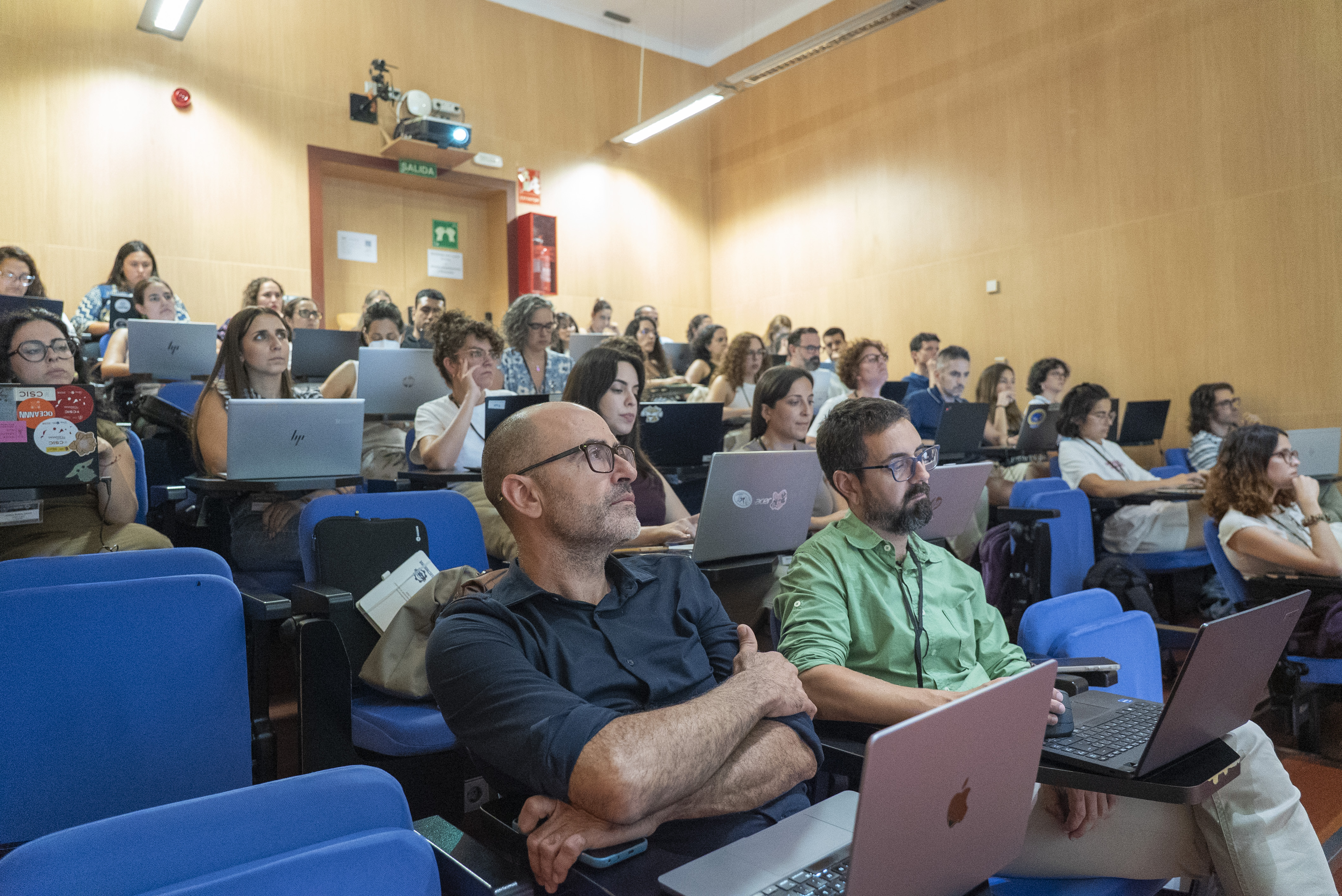
CIARMA, the Canary Islands network of European research and innovation project managers, is an informal and collaborative network. It is aimed at professionals who manage European and international projects in the Canary Islands and who participate on an individual basis. Its mission is to promote collaboration, the exchange of knowledge and the adoption of best practice, thereby contributing to the strengthening of the regional research and innovation ecosystem. Since its creation in March 2026, the network now has 54 members, 30 of whom took part in this first meeting.
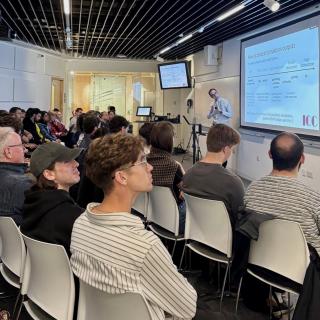
The thematic session began with an online presentation by Edwin van Bloois, Funding Scientific Officer at the Kapteyn Astronomical Institute, University of Groningen, an ExGal-Twin partner. His talk, “AI in Research Management: Experiences from the Kapteyn Institute”, demonstrated how his institution is incorporating artificial intelligence into research management.
This was followed by the training session “Generative AI for European Project Managers”, delivered by Rafael Vázquez Valenzuela, a professor at the University of Seville. The four-hour training session covered the fundamentals and current tools of generative AI, as well as advanced prompting techniques. It also demonstrated how to apply these to the drafting and revision of documents and to the entire lifecycle of a European project. The final session addressed dissemination, exploitation and communication (DEC) and the responsible and ethical use of AI in Horizon Europe, featuring a practical case study.
About ExGal-Twin and CIARMA
ExGal-Twin (Excellence in Galaxies – Twinning the IAC) is a Horizon Europe (Widening – Twinning) project coordinated by the IAC. Its partners are the University of Groningen (Kapteyn Astronomical Institute), the CNRS (Observatoire de Strasbourg) and Durham University (Institute for Computational Cosmology). In addition to scientific excellence, the project aims to strengthen the project management and administration capabilities of the IAC and the Canary Islands’ research and innovation ecosystem.
CIARMA stems from the work of the ExGal-Twin project. It builds on the work initiated by the ITC following the FORWARD project and is supported by the ACIISI. Membership is free and individual.
More information: