
From today until 5 December 2025, the Instituto de Astrofísica de Canarias (IAC) is hosting the SO/PHI Science and Team Meetings, an international gathering focused on the scientific and technical advances of the Polarimetric and Helioseismic Imager (PHI) instrument aboard ESA's Solar Orbiter (SO) space mission. The development of PHI was co-led by the Spanish Space Solar Physics Consortium (S3PC), which also currently coordinates its scientific operation and exploitation. The IAC is part of this network.
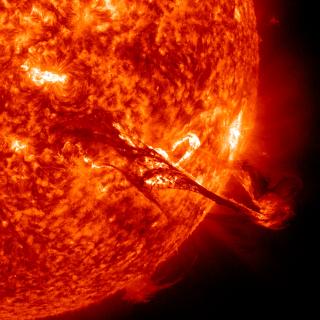
PHI is a high-precision solar observation instrument equipped with two telescopes—one full-disk (FDT) and one high-resolution (HRT)—capable of measuring the Sun's magnetic field and plasma velocity from deep space. Thanks to Solar Orbiter's unique orbit, which allows it to observe the Sun from unprecedented latitudes, PHI is providing unprecedented information about solar magnetic activity and its fundamental processes.
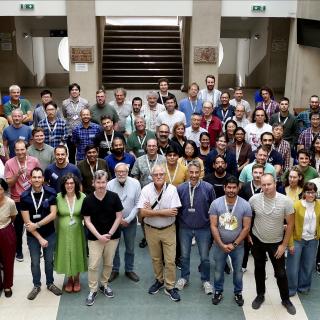
The meeting brings together around 55 international experts in Tenerife, with an additional 30 people participating online.
SO/PHI team meeting
On 1 and 2 December, the SO/PHI technical and operational team will hold an internal meeting to review the status of the instrument and plan its future development. Among the items on the agenda are the evaluation of its technical status, calibration strategies, the improvement of data processing procedures for the HRT and FDT telescopes, the review of mitigation measures for possible degradation, and the design of operational strategies for the next phases of the mission. Advances in the generation of vector magnetograms and image calibrations will also be discussed.
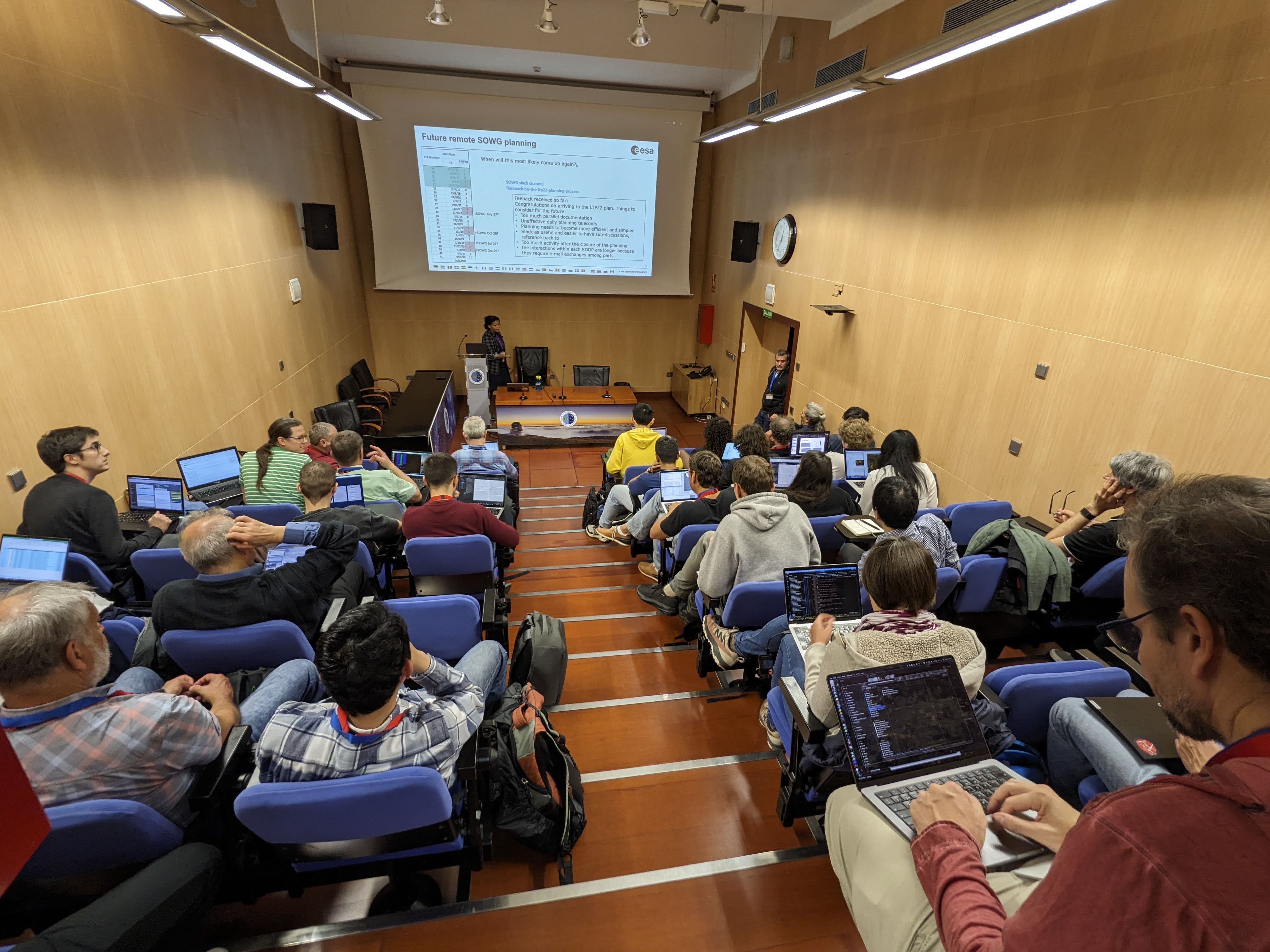
SO/PHI scientific meeting
The first scientific meeting dedicated specifically to the instrument will be held from 3 to 5 December. The programme will include presentations and discussions on seismological studies with the FDT, the connection between the solar surface and the corona, new observations in polar regions using the FDT and HRT, and work combining SO/PHI data with observations from other instruments. Advances in the study of polar magnetic fields, high-resolution spectropolarimetric observations, and improvements in deconvolution and noise reduction techniques in HRT data will also be discussed.
Holding these meetings in Tenerife offers the scientific community an opportunity to exchange knowledge, interact with the team responsible for the instrument, and explore new avenues of collaboration in the study of the solar magnetic field and the dynamics of the Sun's atmosphere. These meetings reinforce the role of the IAC as an international centre of excellence in solar physics and astronomical instrumentation.