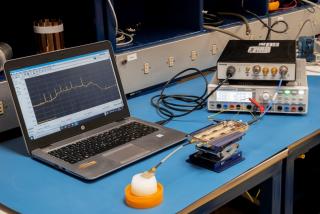
A multidisciplinary team of astrophysicists, neuroscientists, engineers, and musicians has unveiled a pioneering method to “listen” to the structure of the human brain. Published in Nature Scientific Reports, the study presents the first higher-order sonification applied to structural magnetic resonance imaging (MRI) data. This technique involves transforming three-dimensional information about the brain into sound, taking into account the spatial relationships and complex structure of the data. To do this, mathematical tools originally developed to study the large-scale structure of the universe are used, allowing hidden patterns to be perceived through the ear.
The work emerges from the Cosmic Brain project, led by Francisco-Shu Kitaura, a researcher at the IAC and the University of La Laguna, which adapts cosmological analysis techniques to neuroimaging with the long-term goal of understanding brain aging and—potentially—supporting the early detection of neurodegenerative disease.
From cosmology to brain analysis
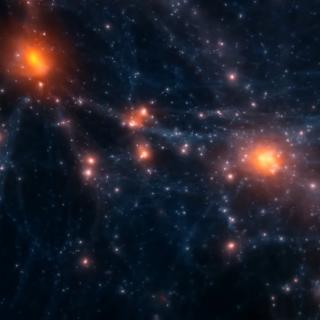
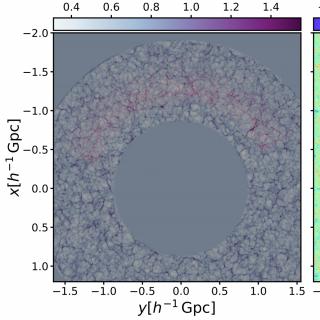
At the heart of this innovation is the use of advanced mathematical tools—known as higher-order statistics—applied to magnetic resonance images of the brain. In cosmology, these techniques are used to analyse how galaxies are organised and grouped together to form complex structures in the universe. Now, that same approach is being applied to the study of the human brain, allowing us to detect and describe in greater detail the richness and complexity of its internal architecture.

Using advanced analysis of magnetic resonance imaging, the team translates variations in brain structure into a wide range of sounds and musical notes. "The result shows that the complex three-dimensional shapes of the brain can be converted into audible patterns with little loss of relevant information,’ explains Kitaura. ‘This approach lays a solid and quantifiable foundation for sonification, with the potential to be applied to other types of complex data in fields such as science, engineering and medicine".
The study builds directly on previous work by the team (comprising Aurelio Carnero Rosell, Marc Huertas-Company, Niels Janssen, Antonella Maselli and Ernesto Pereda, together with Francisco-Shu Kitaura), which had already demonstrated that these mathematical tools can be used to extract key information from magnetic resonance images, such as estimates of brain age.
Science, music and accessibility
The origin of this scientific project is as unique as it is personal. The idea began to take shape when Emi-Pauline Kitaura, then only 14 years old and studying the cello, did an internship in the research group of her father, the study's lead author. Her connection to music was the catalyst that led the team to explore sonification not only as a powerful outreach tool, but also as a method of scientific analysis with a solid mathematical basis.
During her time with the group, Emi-Pauline learned to programme in Python, a high-level, open-source programming language, familiarised herself with statistical concepts, and contributed directly to the development of the code that led to the method presented in the study.
Beyond research applications, the authors highlight that sonification offers new avenues of accessibility, as it allows visually impaired scientists and doctors to perceive complex multidimensional data through sound. Subtle structural variations in brain images, often difficult to distinguish visually, can be identified through auditory cues.
"The higher-order sonification technique developed in this work offers a general mathematical framework that, in principle, can be applied to other types of complex, multidimensional data," Kitaura points out. "This opens the door to its use in the study of complex systems beyond the human brain, especially in cases where structures do not follow simple patterns," the researcher concludes.
Article: Kitaura, FS., Kitaura, EP., Janssen, N. et al. Higher-order sonification of the human brain.Sci Rep 15, 42309 (2025). https://doi.org/10.1038/s41598-025-26438-7
Contact:
Francisco-Shu Kitaura, fkitaura [at] ull.edu.es (fkitaura[at]ull[dot]edu[dot]es)