
Bibcode
Ruiz-Granda, M.; Diego-Palazuelos, P.; Gimeno-Amo, C.; Vielva, P.; Lonappan, A. I.; Namikawa, T.; Génova-Santos, R. T.; Lembo, M.; Nagata, R.; Remazeilles, M.; Adak, D.; Allys, E.; Anand, A.; Aumont, J.; Baccigalupi, C.; Ballardini, M.; Banday, A. J.; Barreiro, R. B.; Bartolo, N.; Basak, S.; Bersanelli, M.; Besnard, A.; Blinov, D.; Bortolami, M.; Bouchet, F.; Brinckmann, T.; Cacciotti, F.; Calabrese, E.; Campeti, P.; Carones, A.; Casas, F. J.; Cheung, K.; Citran, M.; Clermont, L.; Columbro, F.; Coppolecchia, A.; de Bernardis, P.; de Haan, T.; de la Hoz, E.; De Lucia, M.; Della Torre, S.; Di Giorgi, E.; Eriksen, H. K.; Finelli, F.; Franceschet, C.; Fuskeland, U.; Galloni, G.; Galloway, M.; Gervasi, M.; Ghigna, T.; Giardiello, S.; Gruppuso, A.; Hazumi, M.; Hergt, L. T.; Hivon, E.; Ichiki, K.; Jiang, H.; Jost, B.; Kohri, K.; Lamagna, L.; Lattanzi, M.; Leloup, C.; Levrier, F.; López-Caniego, M.; Luzzi, G.; Macias-Perez, J.; Maranchery, V.; Martínez-González, E.; Masi, S.; Matarrese, S.; Matsumura, T.; Micheli, S.; Monelli, M.; Montier, L.; Morgante, G.; Najafi, M.; Novelli, A.; Noviello, F.; Obata, I.; Occhiuzzi, A.; Paiella, A.; Paoletti, D.; Pascual-Cisneros, G.; Piacentini, F.; Piccirilli, G.; Polenta, G.; Porcelli, L.; Raffuzzi, N.; Rizzieri, A.; Rubiño-Martín, J. A.; Sakurai, Y.; Sanghavi, J.; Scott, D.; Shiraishi, M.; Signorelli, G.; Sullivan, R. M.; Takase, Y.; Terenzi, L.; Tomasi, M.; Tristram, M. et al.
Bibliographical reference
Journal of Cosmology and Astroparticle Physics
Advertised on:
11
2025
Citations
1
Refereed citations
1
Description
Cosmic microwave background (CMB) photons are deflected by large-scale structure through gravitational lensing. This secondary effect introduces higher-order correlations in CMB anisotropies, which are used to reconstruct lensing deflections. This allows mapping of the integrated matter distribution along the line of sight, probing the growth of structure, and recovering an undistorted view of the last-scattering surface. Gravitational lensing has been measured by previous CMB experiments, with Planck's 42 σ detection being the current best full-sky lensing map. We present an enhanced LiteBIRD lensing map by extending the CMB multipole range and including the minimum-variance estimation, leading to a 49 to 58 σ detection over 80 % of the sky, depending on the final complexity of polarized Galactic emission. The combination of Planck and LiteBIRD will be the best full-sky lensing map in the 2030s, providing a 72 to 78 σ detection over 80 % of the sky, almost doubling Planck's sensitivity. Finally, we explore different applications of the lensing map, including cosmological parameter estimation using a lensing-only likelihood and internal delensing, showing that the combination of both experiments leads to improved constraints. The combination of Planck + LiteBIRD will improve the S 8 constraint by a factor of 2 compared to Planck, and Planck + LiteBIRD internal delensing will improve LiteBIRD's tensor-to-scalar ratio constraint by 6 %. We have tested the robustness of our results against foreground models of different complexity, showing that improvements remain even for the most complex foregrounds.
Related projects
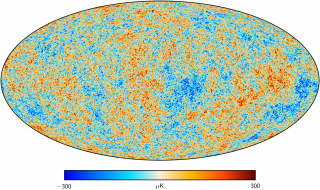
Anisotropy of the Cosmic Microwave Background
The general goal of this project is to determine and characterize the spatial and spectral variations in the temperature and polarisation of the Cosmic Microwave Background in angular scales from several arcminutes to several degrees. The primordial matter density fluctuations which originated the structure in the matter distribution of the present
Rafael
Rebolo López