
Bibcode
Saremi, Elham; Trujillo, Ignacio; Akhlaghi, Mohammad; Ghaffari, Zohreh; Knapen, Johan H.; Banerji, Manda; Dannerbauer, Helmut; Comerón, Sébastien
Bibliographical reference
Astronomy and Astrophysics
Advertised on:
9
2025
Journal
Citations
3
Refereed citations
2
Description
Near-infrared imaging is a powerful technique in observational astronomy, but the bright background – primarily from the Earth's atmosphere – makes the detection of faint features particularly challenging. To recover low surface brightness (LSB) structures in such data, we present NASIM (Near-infrared Automated low Surface brightness reduction In Maneage), a fully automated and reproducible data reduction pipeline optimised for VISTA/VIRCAM observations. NASIM builds on advanced techniques from the GNU Astronomy Utilities (Gnuastro) to effectively remove large-scale instrumental artefacts and detector patterns while preserving faint, diffuse emission crucial for LSB science. As a key science application, we focus on the deep Ks-band observations of the Euclid Deep Field South (KEDFS), one of the deepest VISTA/VIRCAM datasets and a high-priority field for synergy with current and future facilities, including Euclid, JWST, LSST, Roman, Spitzer, and ALMA. Situated near the South Ecliptic Pole, KEDFS offers favourable conditions for deep extragalactic observations due to minimal Galactic foreground contamination. With VIRCAM no longer operational, it now stands as a unique and irreplaceable legacy dataset for near-infrared astronomy. We release selected tiles from the KEDFS survey and highlight representative science cases – including galaxy outskirts, LSB galaxies, and intracluster light – that demonstrate NASIM's ability to recover diffuse structures. Our reduction reaches a surface brightness limit of ∼27.7 mag arcsec-2 (3σ over 100 arcsec2) in the Ks band, approximately 67 times deeper than 2MASS and 11 times deeper than VISTA Hemisphere Survey (VHS). A direct comparison with conventional VISTA data reduction pipelines demonstrates the advantages of NASIM in preserving diffuse emission without compromising compact source detection. All quantitative results presented in this paper are fully reproducible with Maneage (commit a02b40dd).
Related projects
Traces of Galaxy Formation: Stellar populations, Dynamics and Morphology
We are a large, diverse, and very active research group aiming to provide a comprehensive picture for the formation of galaxies in the Universe. Rooted in detailed stellar population analysis, we are constantly exploring and developing new tools and ideas to understand how galaxies came to be what we now observe.
Anna
Ferré Mateu
Spiral Galaxies: Evolution and Consequences
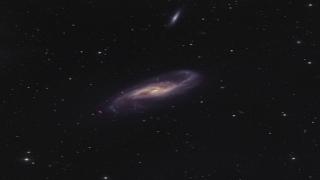
Our small group is well known and respected internationally for our innovative and important work on various aspects of the structure and evolution of nearby spiral galaxies. We primarily use observations at various wavelengths, exploiting synergies that allow us to answer the most pertinent questions relating to what the main properties of
Johan Hendrik
Knapen Koelstra
Molecular Gas and Dust in Galaxies Across Cosmic Time
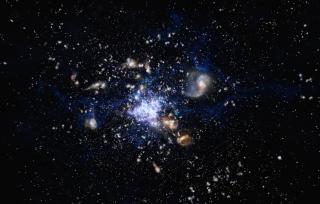
Two of the most fundamental questions in astrophysics are the conversion of molecular gas into stars and how this physical process is a function of environments on all scales, ranging from planetary systems, stellar clusters, galaxies to galaxy clusters. The main goal of this internal project is to get insight into the formation and evolution of
Helmut
Dannerbauer