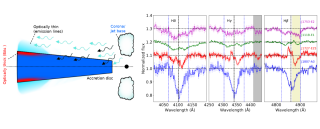
Low-mass X-ray binaries are systems in which a star transfers matter onto a compact object—either a black hole or a neutron star—producing energetic outbursts. During these events, their optical spectra provide a way to study extreme processes of accretion and matter ejection. While some spectroscopic features have been analysed in detail (e.g., revealing disc expansion and the presence of optical winds), the appearance of broad absorptions in the optical regime has traditionally been neglected. In this work, we present the first systematic study of these broad absorptions. We carry out the
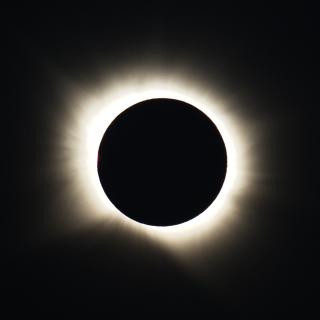
Investigadoras, investigadores y personal técnico del Instituto de Astrofísica de Canarias participaron en actividades de observación, divulgación y formación en distintas localidades españolas durante el eclipse del 12 de agosto. El Instituto de Astrofísica de Canarias (IAC) desplegó el pasado 12 de agosto equipos científicos y técnicos en distintos puntos de la Península para participar en la observación y divulgación del eclipse solar total. Además de la actividad central desarrollada en Palencia en el marco del proyecto internacional NATE (North African Telescope Eclipse), personal del
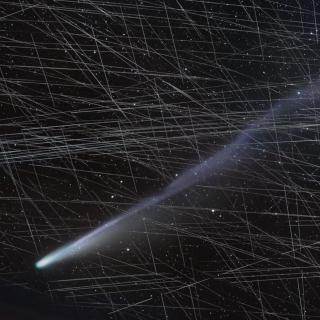
The Instituto de Astrofísica de Canarias (IAC), through its Communication and Scientific Culture Unit (UC3) and in collaboration with the Museum of Science and the Cosmos (MCC), part of Tenerife Museums, publishes the astronomical events for the year 2026 in its traditional calendar. The year 2026 will be marked by a total solar eclipse on 12 August, which will not be visible from the Canary Islands, but will be 70 per cent partial. In addition, 2026 will see the arrival of new comets, meteor showers and other interesting astronomical events. The IAC's 2026 Calendar is illustrated with a