
These days, it’s not uncommon to hear people talk about what they usually use to view eclipses, and they even refer to them as if several people had witnessed them. This is surprising, considering that the last total solar eclipse visible on the Spanish mainland took place in 1905. It’s true that there was another one later in 1912, but it affected such a small area and lasted for such a short time (just a few seconds) that very few people actually saw it.
And nothing else since then, except for the one that could be seen in 1959 in the Canary Islands. But then, what did the people who claim to have already seen several total eclipses actually see? Unless, of course, they traveled abroad to witness one, such as the ones that took place in the United States in 2017 and 2024.
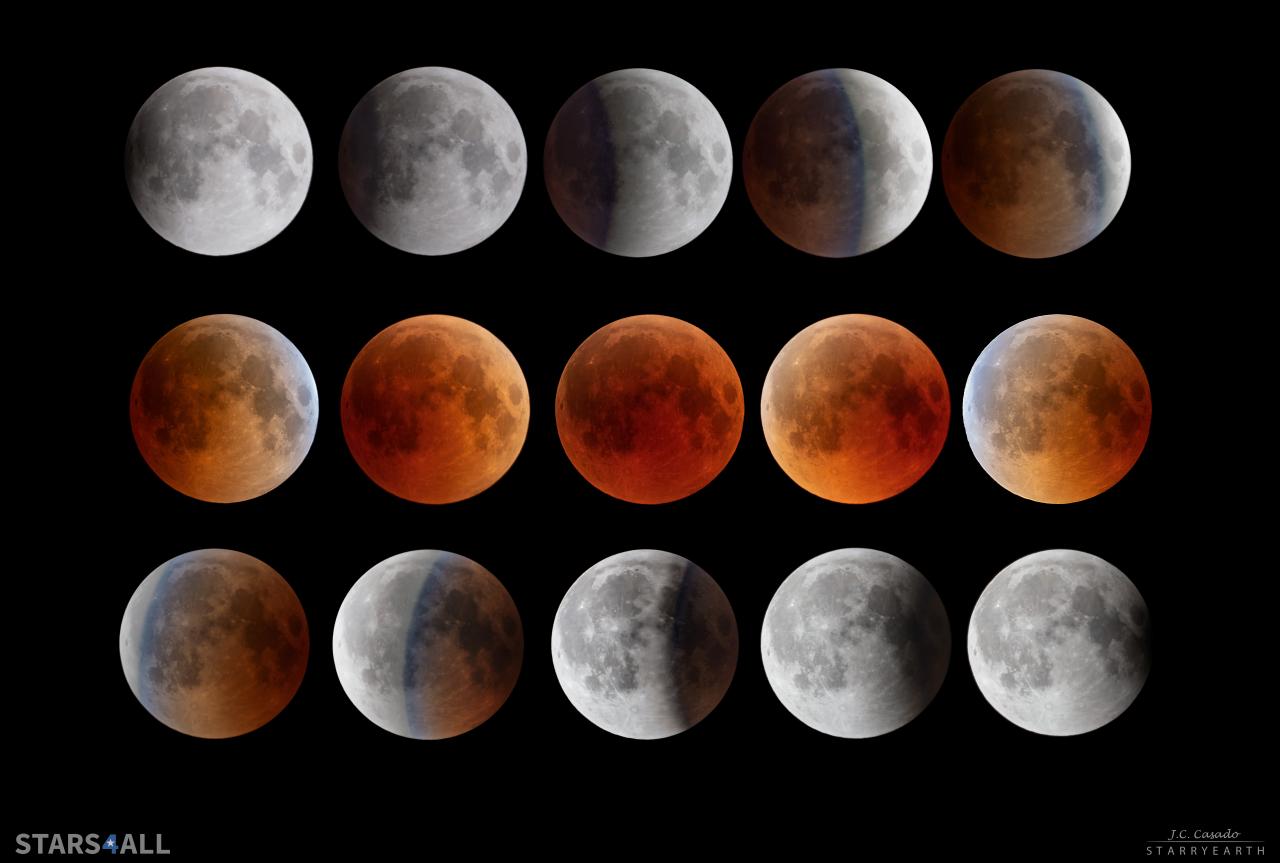
It is very likely that, on the one hand, there is some confusion with lunar eclipses, which are much more frequent. These are eclipses in which the Earth comes between the Sun and the Moon, causing the Moon to appear darker than it normally would. However, it does not disappear completely, as happens during a total solar eclipse. And lunar eclipses are indeed much more frequent; in fact, there are usually several each year.
The other possibility is that you actually witnessed a partial solar eclipse. These occur every few years, which leads many people to mistakenly confuse them with a total solar eclipse. But aside from their cause (both occur when the Moon comes between the Earth and the Sun, except that in the case of a partial eclipse, the Moon does not completely obscure the Sun’s disk), the differences are significant.
The key lies in the totality
Perhaps the first thing to note—as obvious as it may seem—is that there is simply no comparison in terms of spectacularness. A partial solar eclipse may even go unnoticed by someone who isn’t forewarned, especially if the portion of the Sun that is obscured is small. A total solar eclipse, unless it is extremely brief, is impossible to miss in an open sky.
What makes total solar eclipses so unique is the moment when the Sun is completely obscured—known as the totality phase. It’s not just that it gets dark at a time when it shouldn’t, or that we notice identifiable changes such as a drop in temperature or observe twilight-like behavior in animals. What’s most important is the appearance of the Sun’s disk during totality.
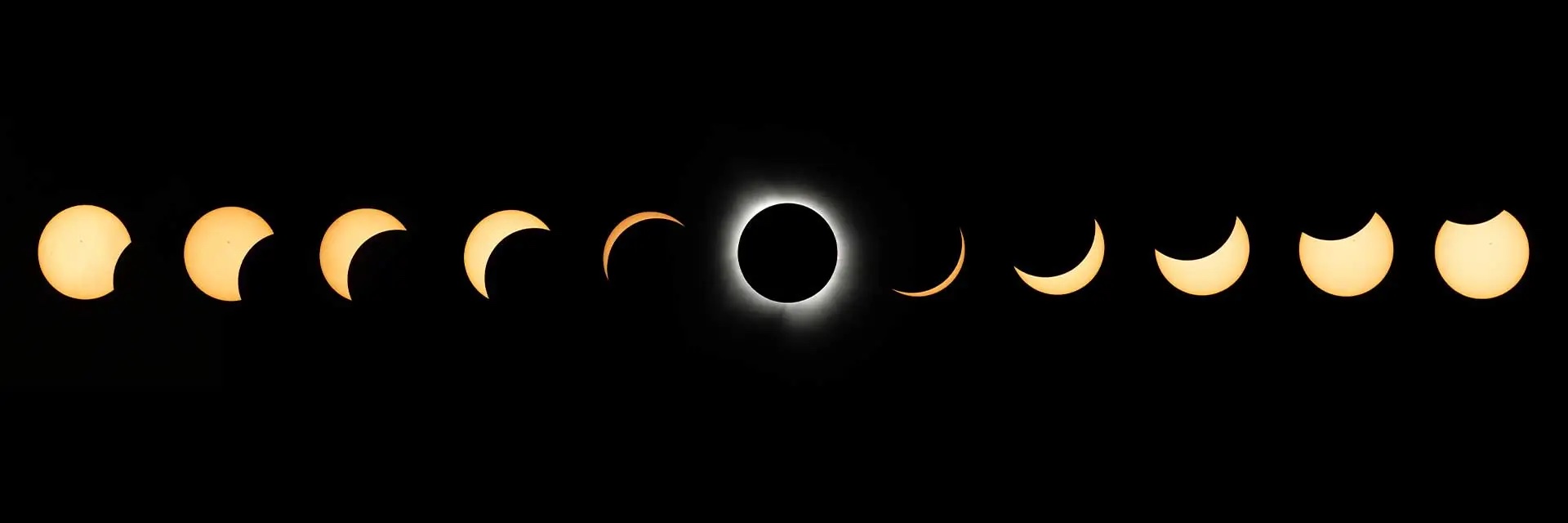
That is the only time we can observe the solar corona—the outermost part of the Sun’s atmosphere—which, because it is millions of times less bright than the Sun itself, is completely invisible to us the rest of the time. However, the solar corona is essential to understanding the dynamics of our star, which govern solar prominences, give rise to the solar wind, and can affect us through what are known as solar storms.
But above all—and beyond the science—it is a breathtaking spectacle, unlike anything else we can see in the sky. As the director of the Canary Islands Institute of Astrophysics (IAC) stated in a recent interview: “During a total solar eclipse, we can see the solar corona with the naked eye. Observing it shows us that the Sun is much larger and more expansive than it appears; it goes far beyond that ‘yellow ball.’ I’ve seen three in my life, and they are truly magical moments.”
A duplicate gift
So let's be clear: it's impossible to mistake a total solar eclipse for anything else. Of course, you must follow all the relevant safety instructions when observing it. And here at the IAC, we’re in luck, because on August 12 we’ll be in Palencia testing the equipment we’ll use for the NATE project during next year’s eclipse. A true gift from the heavens, which won’t be seen again on the Iberian Peninsula until 2053.