
Bibcode
Saremi, Elham; Trujillo, Ignacio; Akhlaghi, Mohammad; Ghaffari, Zohreh; Knapen, Johan H.; Banerji, Manda; Dannerbauer, Helmut; Comerón, Sébastien
Referencia bibliográfica
Astronomy and Astrophysics
Fecha de publicación:
9
2025
Revista
Número de citas
3
Número de citas referidas
2
Descripción
Near-infrared imaging is a powerful technique in observational astronomy, but the bright background – primarily from the Earth's atmosphere – makes the detection of faint features particularly challenging. To recover low surface brightness (LSB) structures in such data, we present NASIM (Near-infrared Automated low Surface brightness reduction In Maneage), a fully automated and reproducible data reduction pipeline optimised for VISTA/VIRCAM observations. NASIM builds on advanced techniques from the GNU Astronomy Utilities (Gnuastro) to effectively remove large-scale instrumental artefacts and detector patterns while preserving faint, diffuse emission crucial for LSB science. As a key science application, we focus on the deep Ks-band observations of the Euclid Deep Field South (KEDFS), one of the deepest VISTA/VIRCAM datasets and a high-priority field for synergy with current and future facilities, including Euclid, JWST, LSST, Roman, Spitzer, and ALMA. Situated near the South Ecliptic Pole, KEDFS offers favourable conditions for deep extragalactic observations due to minimal Galactic foreground contamination. With VIRCAM no longer operational, it now stands as a unique and irreplaceable legacy dataset for near-infrared astronomy. We release selected tiles from the KEDFS survey and highlight representative science cases – including galaxy outskirts, LSB galaxies, and intracluster light – that demonstrate NASIM's ability to recover diffuse structures. Our reduction reaches a surface brightness limit of ∼27.7 mag arcsec-2 (3σ over 100 arcsec2) in the Ks band, approximately 67 times deeper than 2MASS and 11 times deeper than VISTA Hemisphere Survey (VHS). A direct comparison with conventional VISTA data reduction pipelines demonstrates the advantages of NASIM in preserving diffuse emission without compromising compact source detection. All quantitative results presented in this paper are fully reproducible with Maneage (commit a02b40dd).
Proyectos relacionados
Huellas de la Formación de las Galaxias: Poblaciones estelares, Dinámica y Morfología
Bienvenida a la página web del g rupo de investigación Traces of Galaxy Formation. Somos un grupo de investigación amplio, diverso y muy activo cuyo objetivo principal es entender la formación de galaxias en el Universo de una manera lo más completa posible. Con el estudio detellado de las poblaciones estelares como bandera, estamos constantemente
Anna
Ferré Mateu
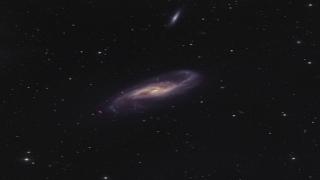
Las Galaxias Espirales: Evolución y Consecuencias
Nuestro grupo pequeño esta bien conocido y respetado internacionalmente por nuestro trabajo inovativo e importante en varios aspectos de la estructura y la evolución de las galaxias espirales cercanas. Usamos principalmente observaciones en varias longitudes de onda, explotando las sinergías que nos permiten responder a las cuestiones más
Johan Hendrik
Knapen Koelstra
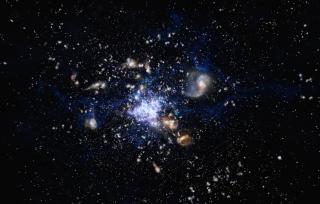
Gas Molecular y Polvo en Galacias através del Tiempo Cósmico
Dos cuestiones fundamentales en la Astrofísica son la conversión de gas molecuar en estrellas y cómo este proceso físico depende del entorno en todas las escalas, desde sistemas planetarios, cúmulos estelares, galaxias hasta cúmulos de galaxias. El objectivo principal de este proyecto es el de estudiar la formación y evolución de galaxias a partir
Helmut
Dannerbauer