Solar and Stellar Magnetism

    General
    Description

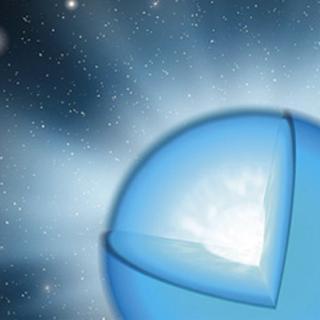
    Magnetic fields are at the base of star formation and stellar structure and evolution. When stars are born, magnetic fields brake the rotation during the collapse of the mollecular cloud. In the end of the life of a star, magnetic fields can play a key role in the form of the strong winds that lead to the last stages of stellar evolution. During the whole adult life of a star, magnetic fields are the origin of stellar activity. Our Sun has magnetic fields that give rise to such spectacular activity that impacts the climate on Earth. The magnetic activity in other stars is, in some cases, of orders of magnitude more intense than the solar one, influencing – often drastically – the transport of chemical species and angular momentum, as well as affecting the possible planetary systems around them.

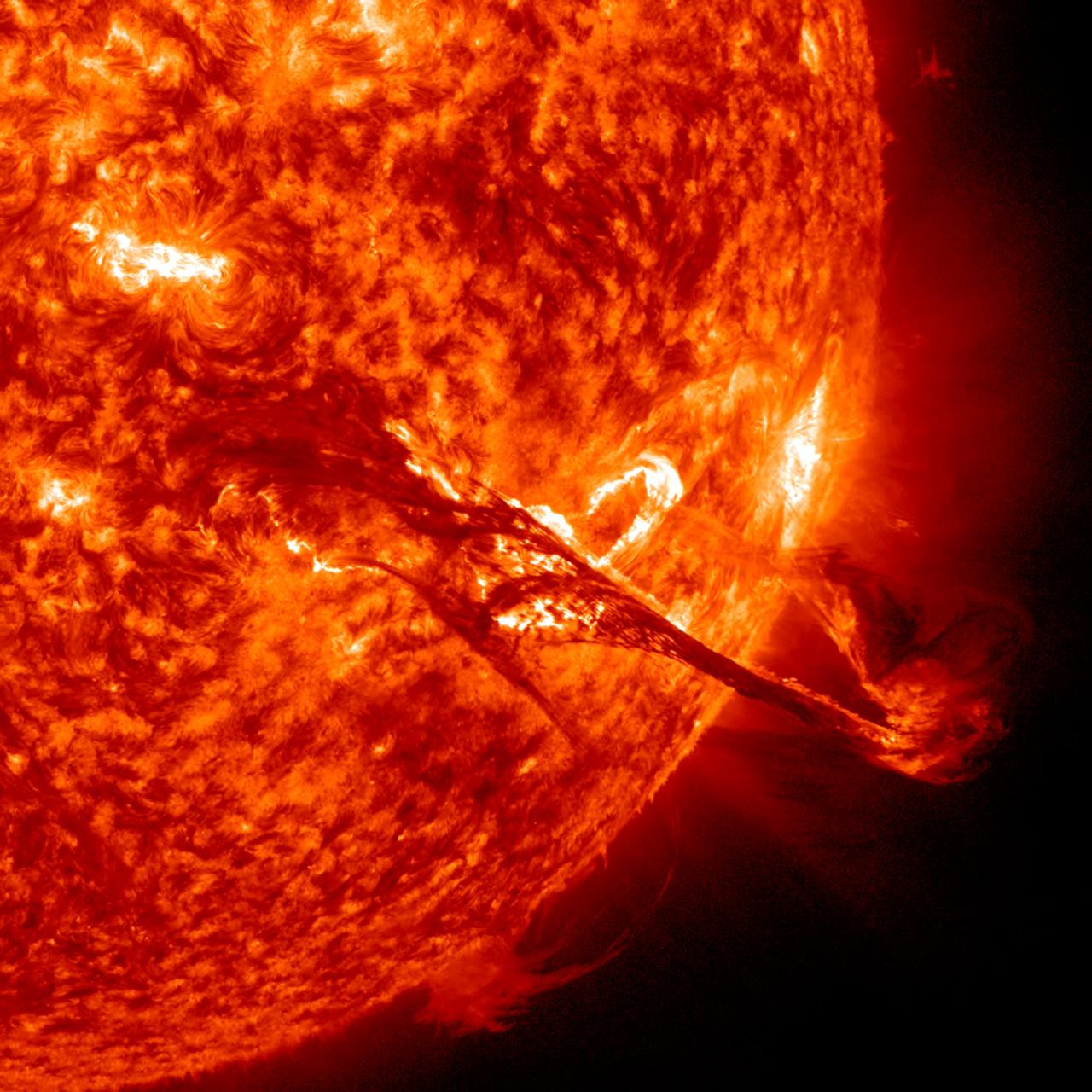
    The aim of this project is the study of the diverse manifestations of the magnetic field that can be observed in the solar atmosphere and in other stars. These include distinct structures as sunspots, weak quiet-sun fields or chromospheric and coronal features such as filaments and prominences. The following research topics have been gradually faced:

    Solar magnetism

    1. Structure and evolution of Sunspot magnetic fields.

    2. Structure and evolution of quiet Sun magnetic fields.

    3. Structure and evolution of the magnetism of the chromosphere and of chromospheric strcutures (promiences, spicules,...)

    4. Structure and evolution or coronal loops.

    5. Structure and evolution of the Sun's global field. Studies of the activity cycle.

    6. Empirical study of propagation of magnetohydrodynamic waves in magnetic structures.

    7. Empirical study of energy transfer mechanisms related with the heating of the external atmospheric layers.

    8. Empirical study of the influence of partial ionisation in the dynamics of the solar atmosphere.

    9. Participation in the European Solar Telescope project.

    Stellar magnetism

    1. Development of numerical tools to diagnose stellar magnetic fields, both in the surface and in the chromsphere.

    2. Study of magnetic fields in stellar prominences.

    3. Study of the role of magnetic fields in the late stages of stellar evolution.

    Principal investigator
    Project staff
    1. Spiral waves in sunspots: They have been interpreted as magnetoacoustic waves propagating from the interior to the atmosphere following the direction of the magnetic field. We have characterized the magnetic field topology, dismissing the twist of the field lines as the cause of the spiral shape (Felipe et al. 2019).
    2. Magnetic response to umbral flashes: Simultaneous spectropolarimetric observations of the chromospheric He I 10830 and Ca II 8542 lines have been used to estimate the fluctuations of the magnetic field associated to shock waves. The shocks cause expansion of the magnetic field lines (Houston et al. 2018, including A. Asensio Ramos).
    Related publications

    Coronal Cooling as a Result of Mixing by the Nonlinear Kelvin-Helmholtz Instability 2019ApJ...885..101H
    Fast-to-Alfvén Mode Conversion and Ambipolar Heating in Structured Media. II. Numerical Simulation 2019ApJ...883..179K
    High-resolution observations of the umbral filament in AR NOAA 12529 2019NCimC..42...12G
    Two-fluid simulations of waves in the solar chromosphere. II. Propagation and damping of fast magneto-acoustic waves and shocks 2019A&A...630A..79P
    FIRTEZ-dz. A forward and inverse solver of the polarized radiative transfer equation under Zeeman regime in geometrical scale 2019A&A...629A..24P
    Properties of the Umbral Filament Observed in Active Region NOAA 12529 2019ApJ...880...34G
    Mixed properties of MHD waves in non-uniform plasmas 2019FrASS...6...20G
    Two-fluid simulations of waves in the solar chromosphere. I. Numerical code verification 2019A&A...627A..25P
    Stokes inversion based on convolutional neural networks 2019A&A...626A.102A
    Spectropolarimetric analysis of an active region filament. I. Magnetic and dynamical properties from single component inversions 2019A&A...625A.128D
    Spectropolarimetric analysis of an active region filament.. II. Evidence of the limitations of a single-component model 2019A&A...625A.129D
    Inference of magnetic field strength and density from damped transverse coronal waves 2019A&A...625A..35A
    Chromospheric polarimetry through multiline observations of the 850 nm spectral region III: Chromospheric jets driven by twisted magnetic fields 2019MNRAS.486.4203Q
    High-resolution spectroscopy of Boyajian's star during optical dimming events 2019MNRAS.486..236M
    Diagnostic potential of the Ca II 8542 Å line for solar filaments 2019A&A...623A.178D
    Recent advancements in the EST project 2019AdSpR..63.1389J
    Inferring physical parameters in solar prominence threads 2019A&A...622A..88M
    Spiral-shaped wavefronts in a sunspot umbra 2019A&A...621A..43F
    Fast-to-Alfvén Mode Conversion Mediated by Hall Current. II. Application to the Solar Atmosphere 2019ApJ...870...94G
    On Kelvin-Helmholtz and parametric instabilities driven by coronal waves 2019MNRAS.482.1143H
    No unique solution to the seismological problem of standing kink magnetohydrodynamic waves 2019A&A...622A..44A
    Real-time, multiframe, blind deconvolution of solar images 2018A&A...620A..73A
    Temporal and Spatial Scales for Coronal Heating by Alfvén Wave Dissipation in Transverse Loop Oscillations 2018RNAAS...2d.196T
    Three-dimensional simulations of solar magneto-convection including effects of partial ionization 2018A&A...618A..87K
    CLASP Constraints on the Magnetization and Geometrical Complexity of the Chromosphere-Corona Transition Region 2018ApJ...866L..15T
    Study of the polarization produced by the Zeeman effect in the solar Mg I b lines 2018MNRAS.481.5675Q
    A Statistical Inference Method for Interpreting the CLASP Observations 2018ApJ...865...48S
    Height variation of the cutoff frequency in a sunspot umbra 2018A&A...617A..39F
    Temporal evolution of arch filaments as seen in He I 10 830 Å 2018A&A...617A..55G
    Magnetic topology of the north solar pole 2018A&A...616A..46P
    MOLPOP-CEP: an exact, fast code for multi-level systems 2018A&A...616A.131A
    MHDSTS: a new explicit numerical scheme for simulations of partially ionised solar plasma 2018A&A...615A..67G
    Enhancing SDO/HMI images using deep learning 2018A&A...614A...5D
    Inversions of synthetic umbral flashes: Effects of scanning time on the inferred atmospheres 2018A&A...614A..73F
    High-resolution imaging and near-infrared spectroscopy of penumbral decay 2018A&A...614A...2V
    The Magnetic Response of the Solar Atmosphere to Umbral Flashes 2018ApJ...860...28H
    Fast-to-Alfvén Mode Conversion in the Presence of Ambipolar Diffusion 2018ApJ...856...20C
    Partially Ionized Plasmas in Astrophysics 2018SSRv..214...58B
    Solar polarimetry in the K I D2 line : A novel possibility for a stratospheric balloon 2018A&A...610A..79Q
    Persistent magnetic vortex flow at a supergranular vertex 2018A&A...610A..84R