Solar and Stellar Magnetism

    General
    Description

    Magnetic fields are at the base of star formation and stellar structure and evolution. When stars are born, magnetic fields brake the rotation during the collapse of the mollecular cloud. In the end of the life of a star, magnetic fields can play a key role in the form of the strong winds that lead to the last stages of stellar evolution. During the whole adult life of a star, magnetic fields are the origin of stellar activity. Our Sun has magnetic fields that give rise to such spectacular activity that impacts the climate on Earth. The magnetic activity in other stars is, in some cases, of orders of magnitude more intense than the solar one, influencing – often drastically – the transport of chemical species and angular momentum, as well as affecting the possible planetary systems around them.

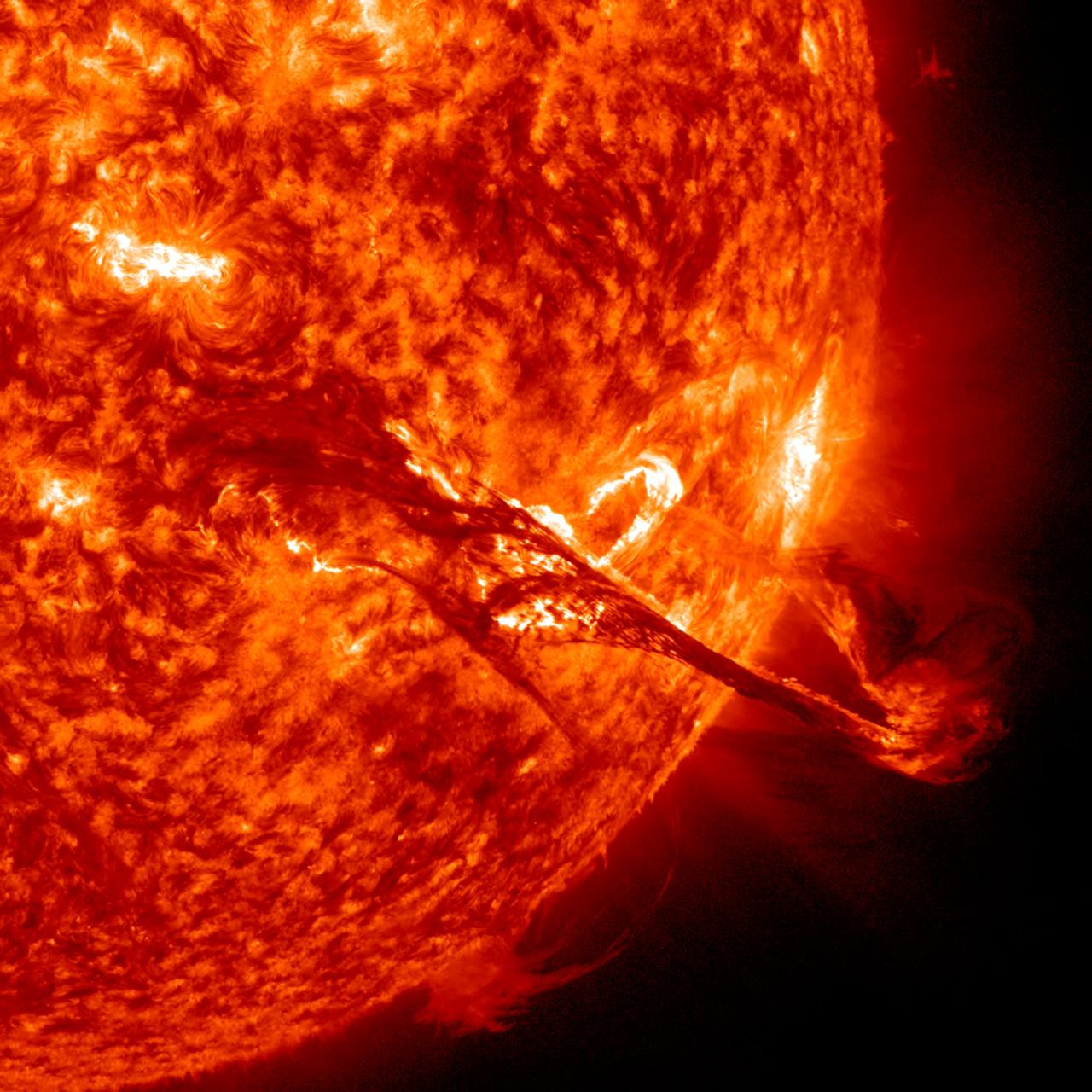
    The aim of this project is the study of the diverse manifestations of the magnetic field that can be observed in the solar atmosphere and in other stars. These include distinct structures as sunspots, weak quiet-sun fields or chromospheric and coronal features such as filaments and prominences. The following research topics have been gradually faced:

    Solar magnetism

    1. Structure and evolution of Sunspot magnetic fields.

    2. Structure and evolution of quiet Sun magnetic fields.

    3. Structure and evolution of the magnetism of the chromosphere and of chromospheric strcutures (promiences, spicules,...)

    4. Structure and evolution or coronal loops.

    5. Structure and evolution of the Sun's global field. Studies of the activity cycle.

    6. Empirical study of propagation of magnetohydrodynamic waves in magnetic structures.

    7. Empirical study of energy transfer mechanisms related with the heating of the external atmospheric layers.

    8. Empirical study of the influence of partial ionisation in the dynamics of the solar atmosphere.

    9. Participation in the European Solar Telescope project.

    Stellar magnetism

    1. Development of numerical tools to diagnose stellar magnetic fields, both in the surface and in the chromsphere.

    2. Study of magnetic fields in stellar prominences.

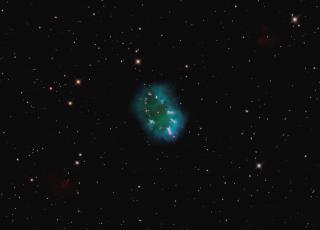
    3. Study of the role of magnetic fields in the late stages of stellar evolution.

    Principal investigator
    Project staff
    1. Spiral waves in sunspots: They have been interpreted as magnetoacoustic waves propagating from the interior to the atmosphere following the direction of the magnetic field. We have characterized the magnetic field topology, dismissing the twist of the field lines as the cause of the spiral shape (Felipe et al. 2019).
    2. Magnetic response to umbral flashes: Simultaneous spectropolarimetric observations of the chromospheric He I 10830 and Ca II 8542 lines have been used to estimate the fluctuations of the magnetic field associated to shock waves. The shocks cause expansion of the magnetic field lines (Houston et al. 2018, including A. Asensio Ramos).
    Related publications

    Moat Flow in the Vicinity of Sunspots for Various Penumbral Configurations 2008ApJ...679..900V
    Mesogranulation and the Solar Surface Magnetic Field Distribution 2011ApJ...727L..30Y
    Magnetic Loops in the Quiet Sun 2010ApJ...723L.185W
    Magnetic field emergence in mesogranular-sized exploding granules observed with sunrise/IMaX data 2012A&A...537A..21P
    Fully Resolved Quiet-Sun Magnetic flux Tube Observed with the SUNRISE/IMAX Instrument 2010ApJ...723L.164L
    Detection of Large Acoustic Energy Flux in the Solar Atmosphere 2010ApJ...723L.134B
    Characterization of horizontal flows around solar pores from high-resolution time series of images 2010A&A...516A..91V
    Bright Points in the Quiet Sun as Observed in the Visible and Near-UV by the Balloon-borne Observatory SUNRISE 2010ApJ...723L.169R
    Variation in sunspot properties between 1999 and 2011 as observed with the Tenerife Infrared Polarimeter 2012A&A...541A..60R
    Two-dimensional solar spectropolarimetry with the KIS/IAA Visible Imaging Polarimeter 2010A&A...520A.115B
    The signature of chromospheric heating in Ca II H spectra 2008A&A...479..213B
    The magnetic flux of the quiet Sun internetwork as observed with the Tenerife infrared polarimeter 2009A&A...502..969B
    The energy of waves in the photosphere and lower chromosphere. II. Intensity statistics 2012A&A...544A..46B
    The energy of waves in the photosphere and lower chromosphere. I. Velocity statistics 2009A&A...507..453B
    The Chromospheric Telescope 2011A&A...534A.105B
    Stray-light contamination and spatial deconvolution of slit-spectrograph observations 2011A&A...535A.129B
    Spectroscopy at the solar limb. I. Average off-limb profiles and Doppler shifts of Ca II H 2011A&A...531A.173B
    Siphon flow in a cool magnetic loop 2012A&A...537A.130B
    Reversal-free Ca II H profiles: a challenge for solar chromosphere modeling in quiet inter-network 2008A&A...484..503R
    Multiline Zeeman signatures through line addition 2009A&A...504.1003S
    Multiline Spectropolarimetry of the Quiet Sun at 5250 and 6302 Å 2008ApJ...674..596S
    Multi-layer Study of Wave Propagation in Sunspots 2010ApJ...722..131F
    Magneto-acoustic waves in sunspots from observations and numerical simulations 2011JPhCS.271a2040F
    Magnetic loop emergence within a granule 2010A&A...511A..14G
    Linear wavelength correlation matrices of photospheric and chromospheric spectral lines. I. Observations vs. modeling 2010A&A...510A..66B
    Internetwork magnetic field distribution from simultaneous 1.56 μm and 630 nm observations 2008A&A...477..953M
    Error propagation in polarimetric demodulation 2008ApOpt..47.2541A
    Application of speckle and (multi-object) multi-frame blind deconvolution techniques on imaging and imaging spectropolarimetric data 2011A&A...533A..21P
    An uncombed inversion of multiwavelength observations reproducing the net circular polarization in a sunspot's penumbra 2011A&A...525A.133B
    A Peculiar Velocity Pattern in and near the Leading Sunspot of NOAA 10781: Wave Refraction by Large-Scale Magnetic Fields? 2010SoPh..264...57B
    A chromospheric dark-cored fibril in Ca II IR spectra 2010AN....331..574B
    A 3D sunspot model derived from an inversion of spectropolarimetric observations and its implications for the penumbral heating 2008A&A...480..825B
    Unnoticed Magnetic Field Oscillations in the Very Quiet Sun Revealed by SUNRISE/IMaX 2011ApJ...730L..37M
    The quiet Sun magnetic field observed with ZIMPOL on THEMIS. I. The probability density function 2009A&A...506.1415B
    Statistical Analysis of the very Quiet Sun Magnetism 2010ApJ...711L..57M
    Small Magnetic Loops Connecting the Quiet Surface and the Hot Outer Atmosphere of the Sun 2010ApJ...714L..94M
    New ATLAS9 and MARCS Model Atmosphere Grids for the Apache Point Observatory Galactic Evolution Experiment (APOGEE) 2012AJ....144..120M
    Model Selection for Spectropolarimetric Inversions 2012ApJ...748...83A
    Influence of phase-diversity image reconstruction techniques on circular polarization asymmetries 2012A&A...539A..42A
    Dead Calm Areas in the Very Quiet Sun 2012ApJ...755..175M