General
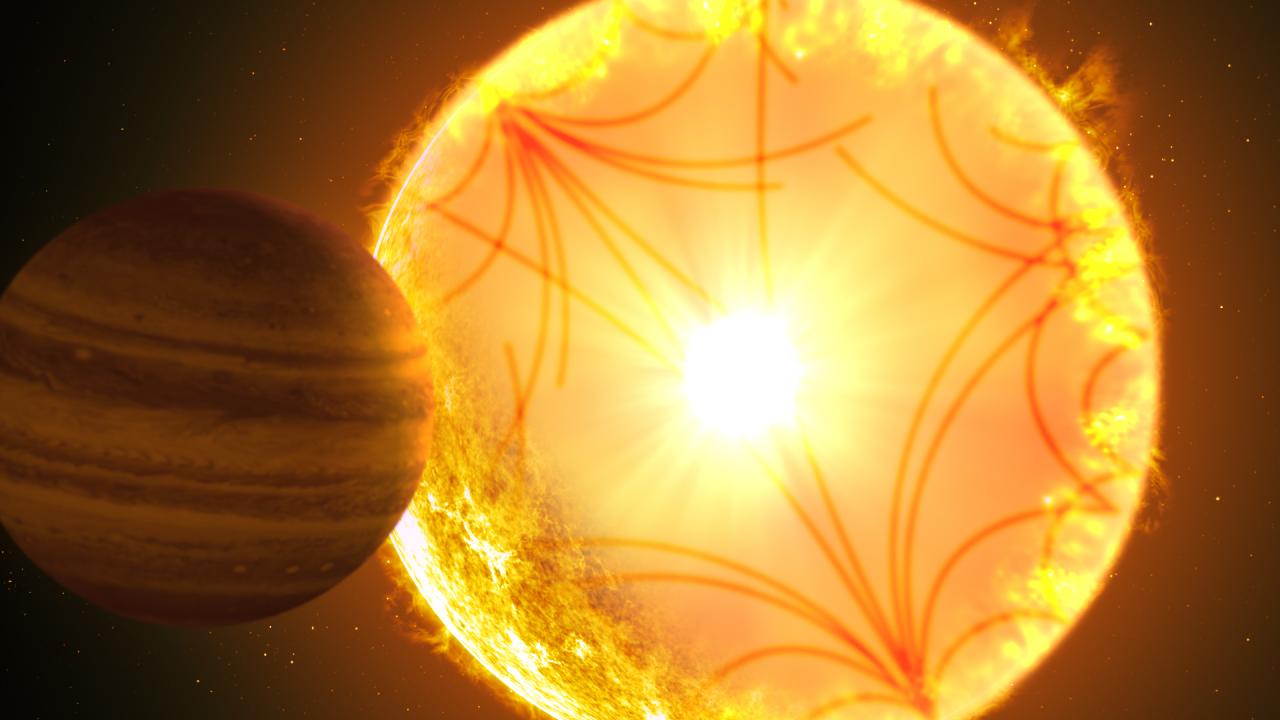
The principal objectives of this project are: 1) to study the structure and dynamics of the solar interior, 2) to extend this study to other stars (either single or in binary systems), 3) to search for extrasolar planets using photometric methods (primarily by transits of their host stars) and their characterization with complementary radial velocity information.
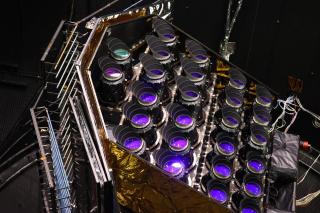
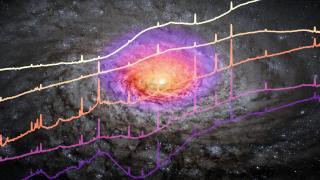
To reach our first objective, we use Helioseismology (analysis of the solar oscillation eigenmodes), a technique that enables us to infer the Sun's internal structure and dynamics with high accuracy. This project covers the various aspects necessary to attain the aforementioned objectives: instrumental and observational (with the international networks BiSON and GONG operating at the ”SolarLab” at Observatorio del Teide), reduction, analysis, and interpretation of data (in particular, the GOLF and VIRGO instruments aboard ESA/SoHO satellite). Finally, theoretical developments in inversion techniques are carried out.
Furthermore, Asteroseismology applies similar techniques to other oscillating stars to infer their evolutionary state as well as their internal structure and dynamics. Thanks to the high-quality photometric data collected by the CoRoT, Kepler, and TESS space missions, it is possible to extract global seismic parameters for hundreds of thousands of solar-like stars, from the main sequence through the red-giant phase. Stellar evolution models are used to find the model that best fits the observables (spectroscopic and individual mode frequencies), providing precise mass, radius, and age for the star. Binary stars provide additional strong constraints on these models and therefore allow testing the intricacies of internal stellar physics.
Precise exoplanet characterization is critically dependent on an accurate knowledge of the host star. In particular, a reliable determination of the stellar age is required to constrain the age and evolutionary state of the planetary system, and to place robust limits on long-term habitability. At the interface between asteroseismology and exoplanet science, detailed seismic modeling of host stars is used to refine the ages of planetary systems. Strong involvement is ensured in the preparation of the ESA PLATO mission (launch expected at the end of 2026), including light-curve calibration, contributions to the science calibration and validation input catalog (scvPIC), proposals for complementary science, and ground-based follow-up observations.
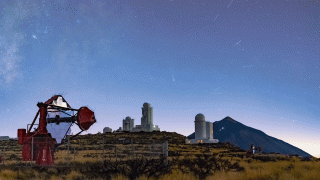
For this project, ground-based observations with the observational facilities available to IAC researchers, in particular at OCAN (Observatorios de Canarias), are key. In particular, ongoing observations with the ground-based, high-precision spectrographs on the SONG (Stellar Observations Network Group) and the Las Cumbres Observatory Network (LCO) are being conducted to improve the spectroscopic and seismic characterization of oscillating stars and to identify binary systems.
Members
Results
Milestones
- We produced and published a state-of-the-art characterization of the stars observed by the Kepler mission in terms of their color-magnitude diagram (CMD) and binarity using data from Gaia DR3 (Godoy-Rivera et al. 2026, A&A, 696, A243)
- In Grossmann et al. (2025, A&A, 696, A42) we used asteroseismic and binary constraints to model the red giant binary system KIC 9163796. We successfully determined the age of the system with a relative precision of less than 10%. We thereby showed that combining asteroseismology with constraints from binarity can significantly improve age precision.
- The study of the magnetic activity of more than 50,000 solar-like stars observed by the Kepler mission was published (Mathur et al. 2025, ApJ, 982, 11). The analysis showed different behaviours of the evolution of magnetic activity with spectral type. This work highlights that the level of magnetic activity of the Sun is similar to its peers.
- We studied the recent photometric evolution of the symbiotic recurrent nova T CrB, eagerly awaited to erupt by the community. We showed that the proposed observational indicators do not reliably predict the outburst, which may occur even without a clear precursor (Merc et al., MNRAS Letters, 541, L14).
Scientific activity
Related publications
News